
- Healthcare
- SAP Fiori
Shortening the path from eye imaging to diagnosis
SAP CleaVision, 2020 — 21
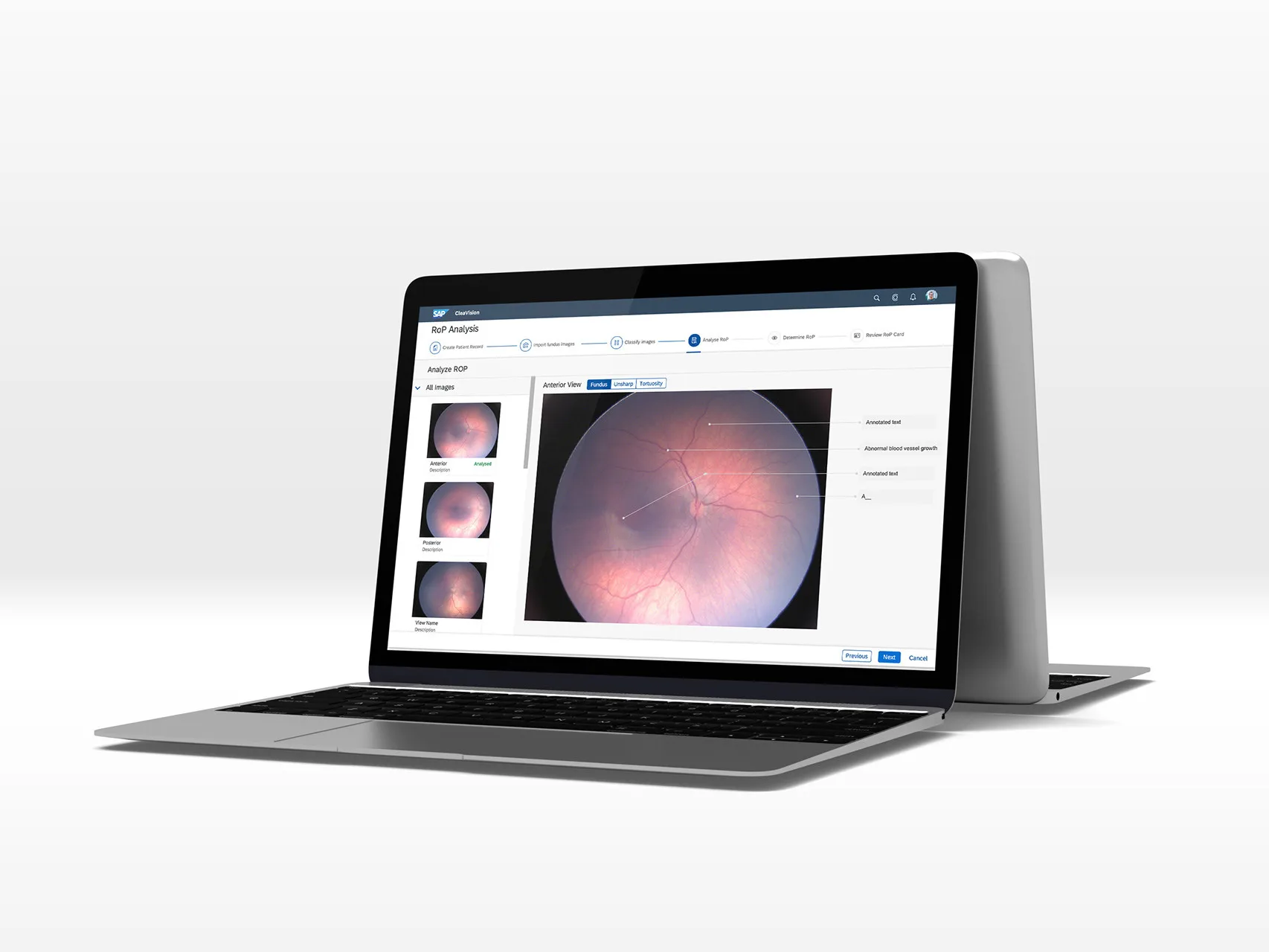
SAP CleaVision is an intelligent eye-care solution for Retinopathy of Prematurity (ROP), a condition in premature babies that must be screened and treated within a narrow window to prevent blindness. Its mission: eliminate preventable blindness by minimising time to diagnosis and maximising the potential for treatment. I was the lead and only UX designer, working with the Bangalore-based core team, medical-imaging experts, architects, hospital and connectivity partners.
Research, remotely and in context
- Video interviews over Teams and WhatsApp with lab technicians in their actual workplaces, documenting the equipment and real workflows.
- Domain immersion through the ROP manuals and training material the technicians recommended.
- Personas and journey maps synthesised from the interviews.
From paper to Fiori
Paper sketches became Balsamiq wireframes, then high-fidelity designs on the SAP Fiori design system. A companion app let ocular experts annotate medical images.
Validation
Remote usability testing with technicians and experts, with feedback gathered through InVision and folded into each iteration.
What I learned
Designing for healthcare meant learning the clinical reality first. Understanding the narrow intervention window and the real imaging workflow mattered more than any interface decision.